Reduce the battle cycle
Look beyond the argument about screen time and consider the feelings, needs, and habits around gaming.
A thoughtful, step-by-step guide to helping your family move toward healthier gaming habits—without making connection an afterthought.
Explore the original guide’s four-part approach, seven learning modules, and practical ideas for rebuilding routines, trust, and offline interests.
14-day refund period.

When her 14-year-old son began spending more and more time gaming, one mother felt increasingly shut out of his world. Closed doors, slipping school performance, fewer in-person friendships, and long hours in front of a screen left her worried and unsure how to reconnect.
Waking in the night to check whether he was still gaming, she felt frightened and unsure how to reach him. If your family is facing something similar, you deserve practical ideas that put understanding and connection alongside clear, caring boundaries.

When taking devices away, setting limits, trying rewards, or imposing a complete ban leads to more arguments, it can be hard to know what to try next. The Game-Free Blueprint offers a more relationship-centered framework for exploring routines, boundaries, and alternatives to gaming.
The guide’s central idea is to approach the issue with curiosity and connection, while keeping appropriate boundaries and seeking qualified support when needed.
After researching gaming habits, adolescent development, and addiction-related patterns, the author says she developed the Game-Free Blueprint. The original page credits consultation and research involving addiction specialists, child psychologists, and neuroscientists. This guide is educational and does not replace individualized clinical advice.
Explore a gentle, structured alternative to daily confrontations. You’ll look at gaming patterns, ways to make room for other interests, trust-building, and routines that can support school and social connection. Every family’s experience is different, so use the ideas at a pace that suits you.
Look beyond the argument about screen time and consider the feelings, needs, and habits around gaming.
Explore gradual ways to reconnect with activities, friendships, movement, and family time.
Use respectful communication and consistent boundaries as part of a broader relationship-focused approach.
Consider practical structures for sleep, school responsibilities, and everyday expectations.
The guide’s four-part framework gives you practical places to begin.
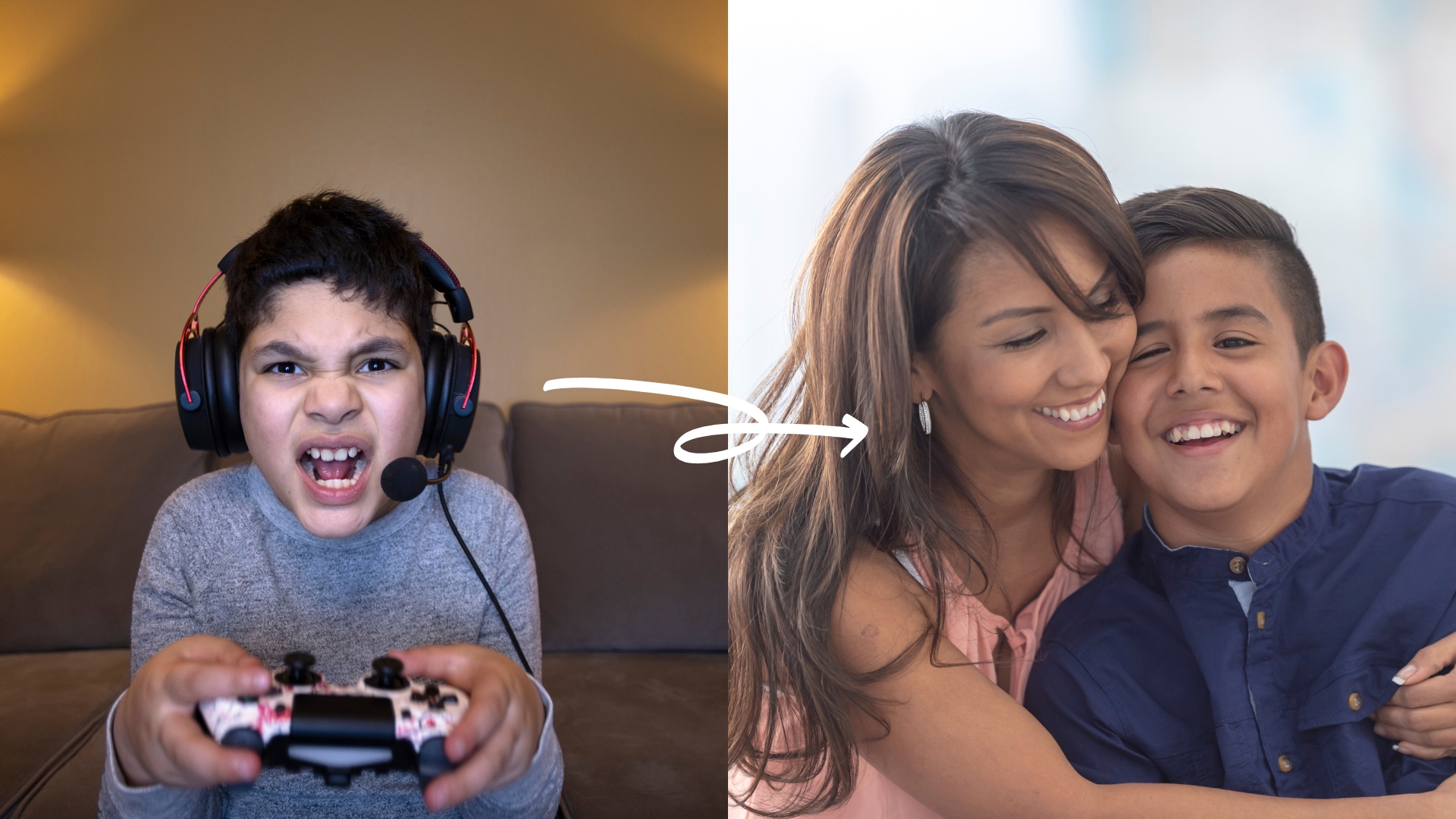
A brief pause-and-redirect technique intended to interrupt an automatic gaming urge and create space for another response.
A structured first-week reset focused on changing patterns and making alternatives easier to explore—not a guaranteed timetable for recovery.
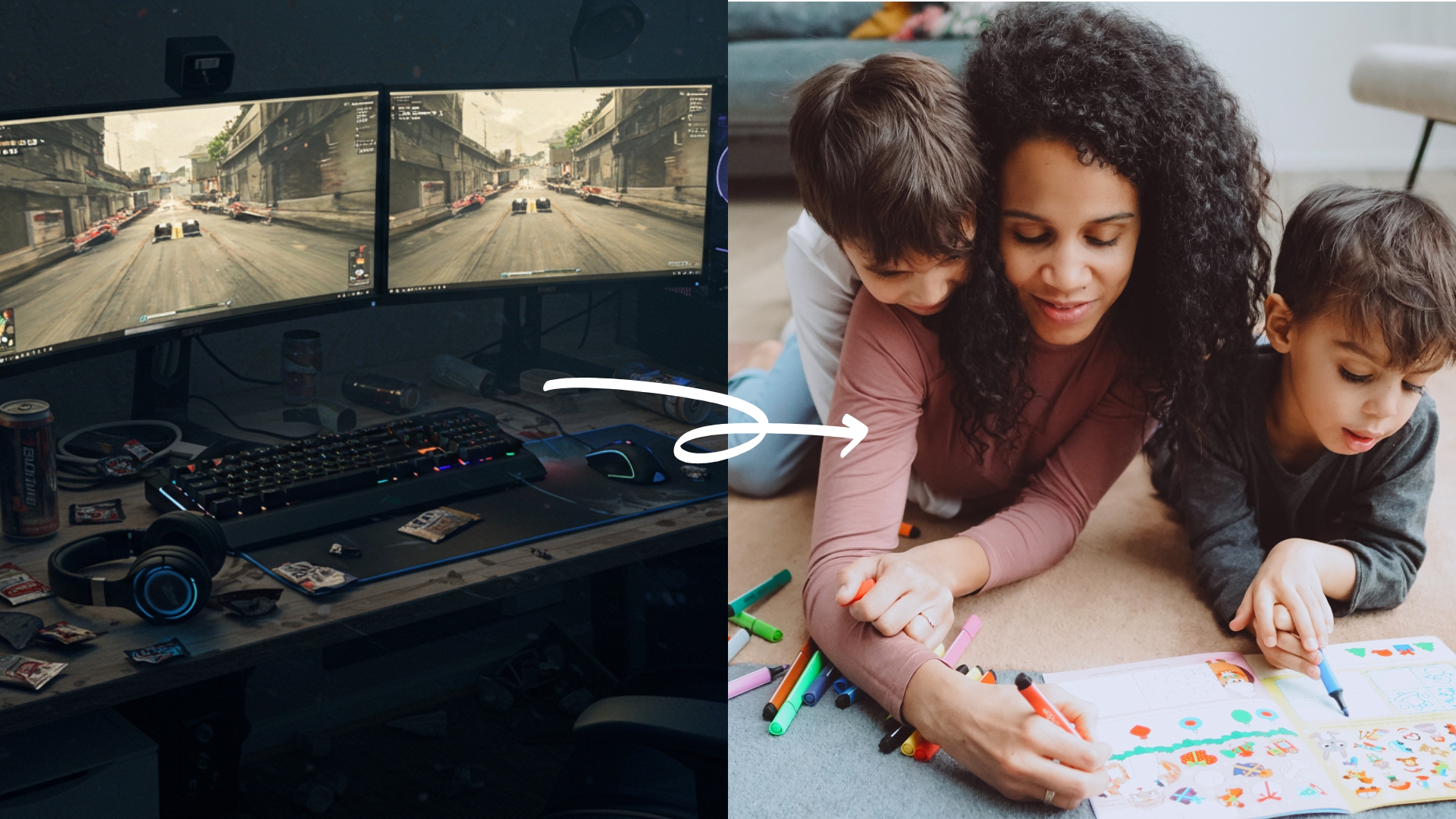
Ideas for reshaping the home environment and daily routine so non-gaming options are easier to choose.
A relationship-first method for rebuilding warmth and trust without making every interaction about gaming.
Inside, you’ll find seven guided modules to help you take the next steps with greater clarity.
Shift from confrontation toward connection. The source describes pattern interruption, state shifting, and helping real-world activities feel more engaging.
Plan for the early transition period with attention to urges, emotional wellbeing, and family stability. The guide’s crisis-related content is not a substitute for professional or emergency care.
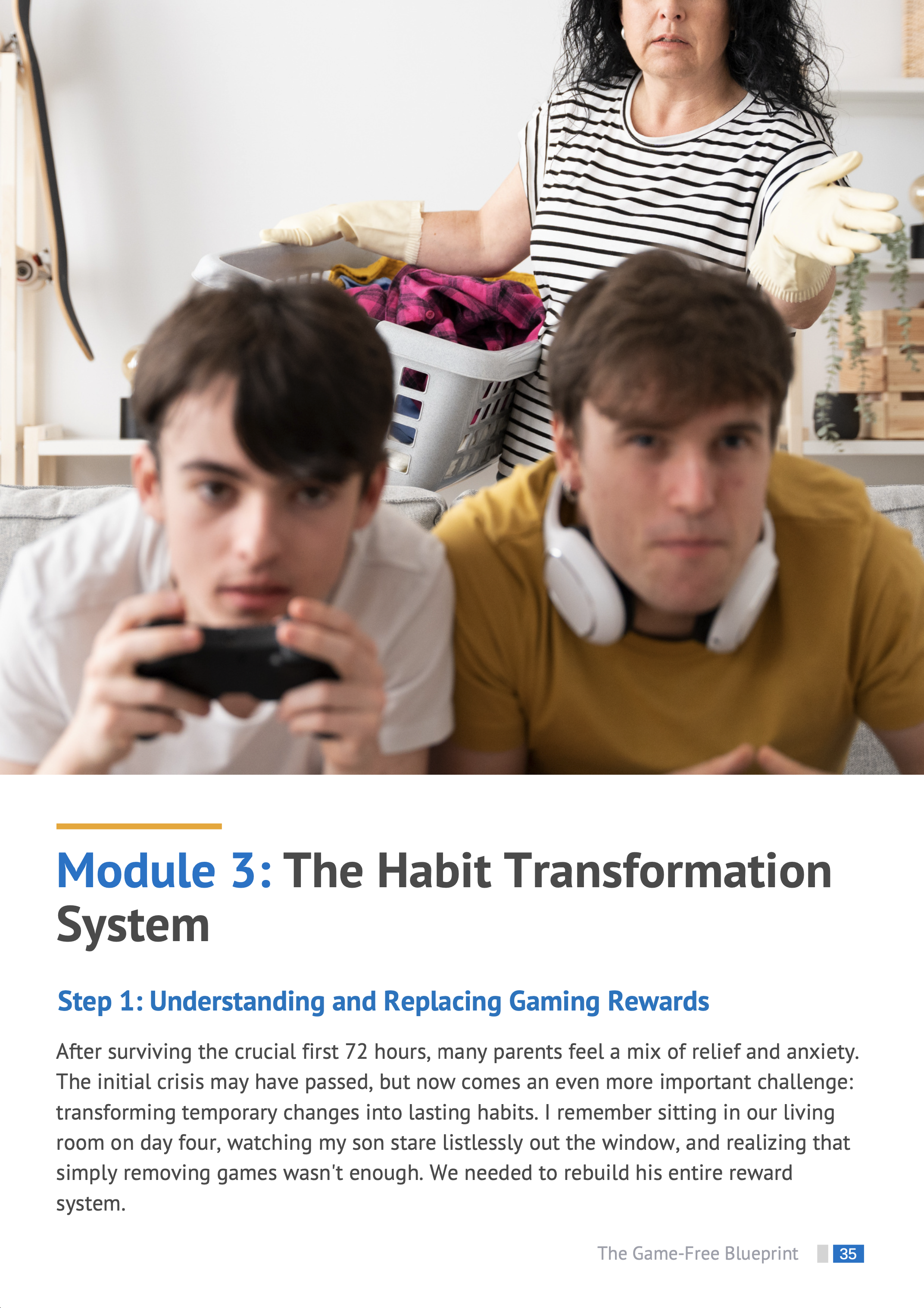
Explore new interests and activities, make transitions manageable, and build engagement over time.
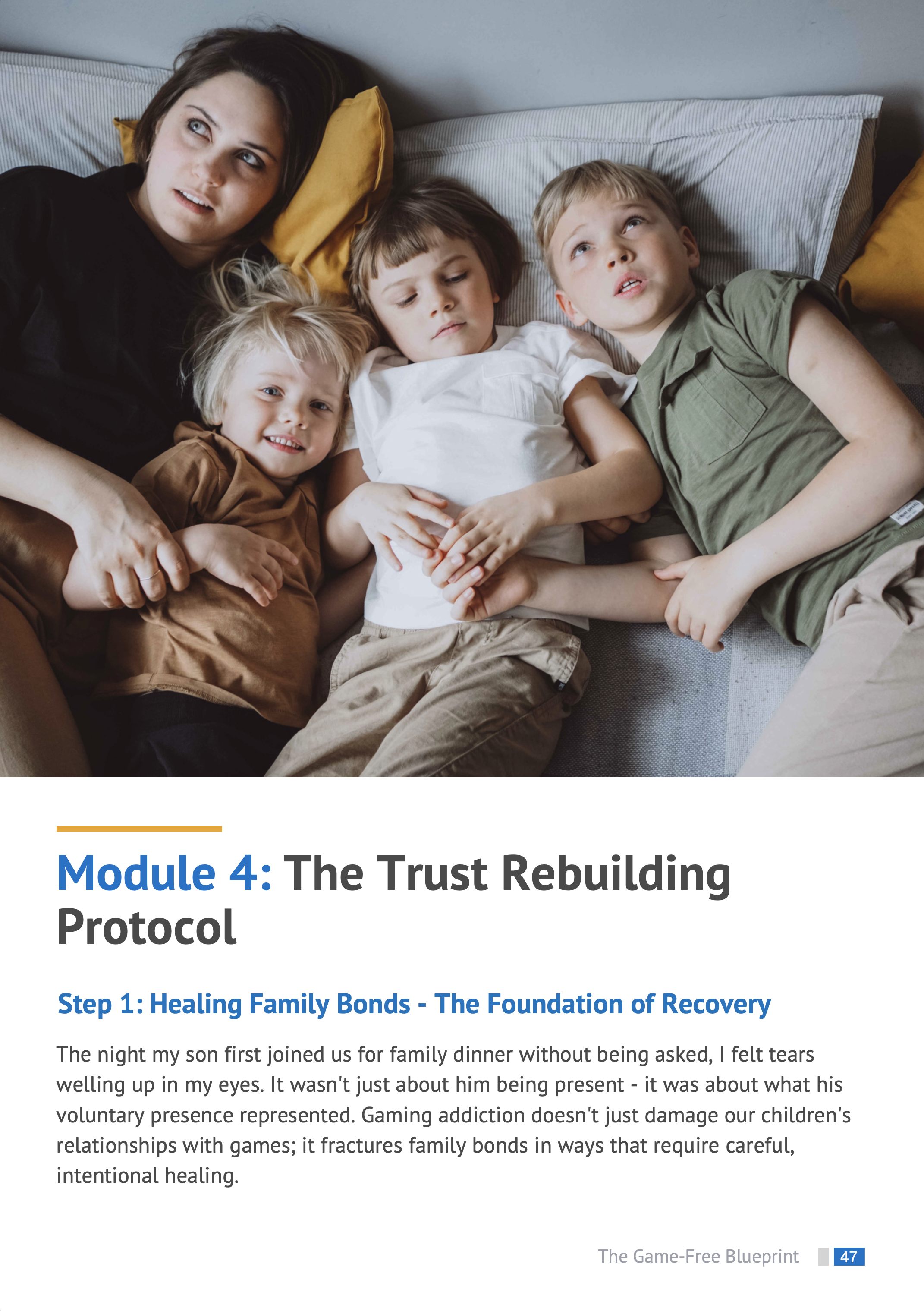
Pair boundaries with repair and connection through communication, trust-building, and consistent follow-through.
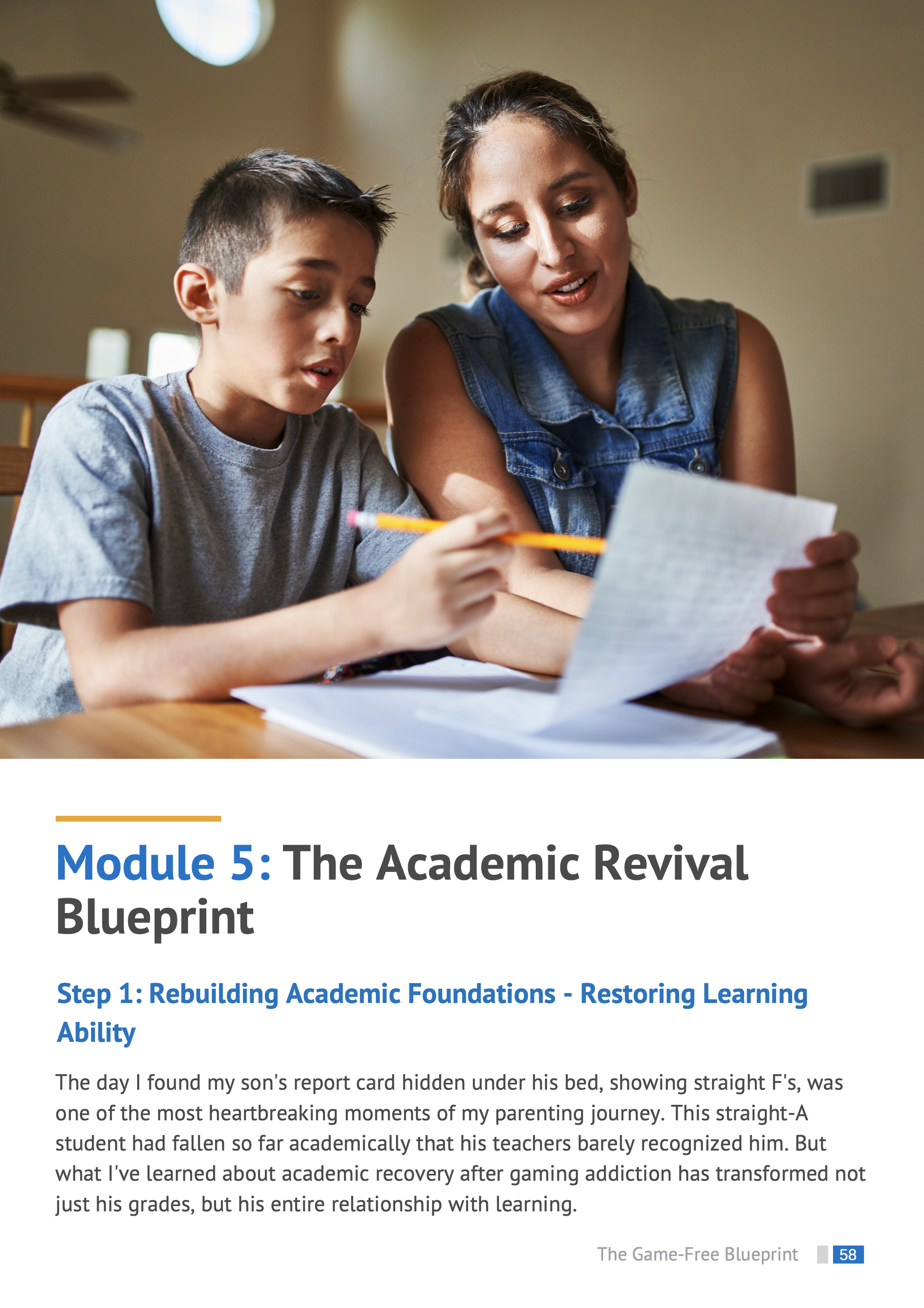
Consider focus, homework routines, and steps toward recovering a more manageable school rhythm.
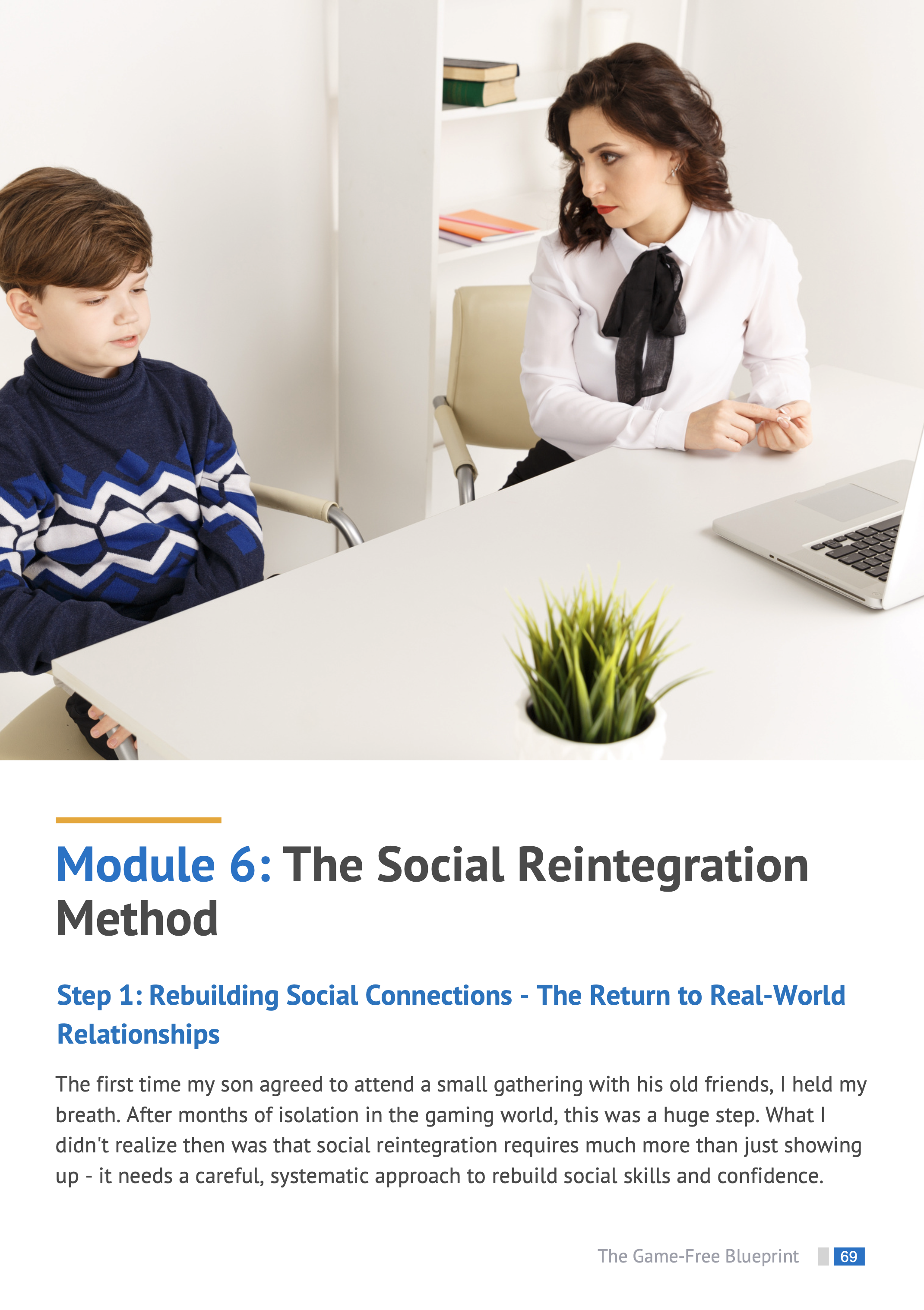
Encourage social confidence and opportunities for connection beyond the screen, at a pace suited to the child.
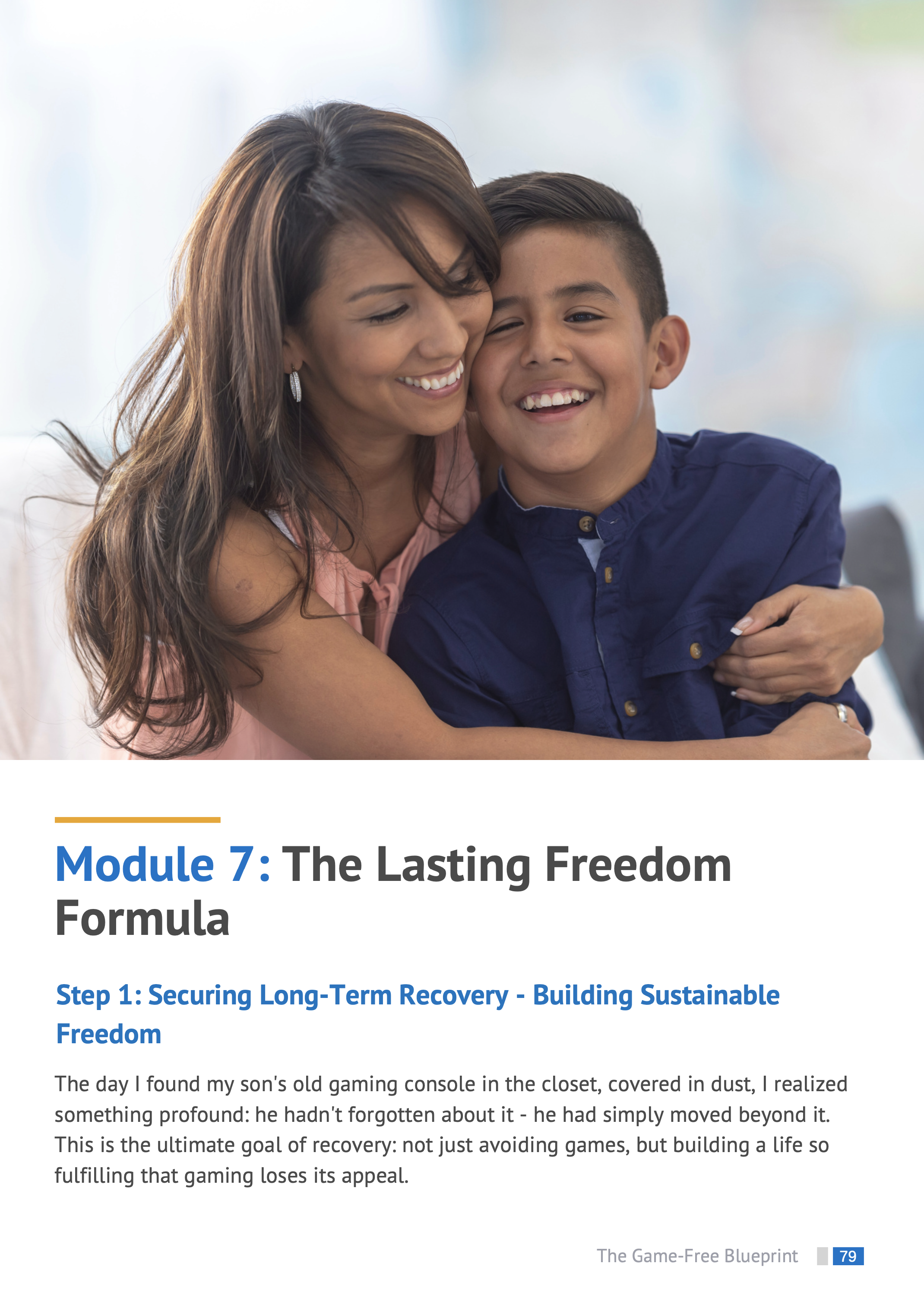
Plan for sustained routines, independence, and setbacks, with strategies to keep adapting as family needs change.
The Complete Game-Free Blueprint: seven modules to help you understand gaming patterns, support transitions, rebuild trust, strengthen school routines, encourage social connection, and plan for ongoing progress.
Your five bonus guides:
Bonus descriptions and the main guide’s content are educational resources. For immediate safety concerns, contact local emergency services or a qualified crisis professional.
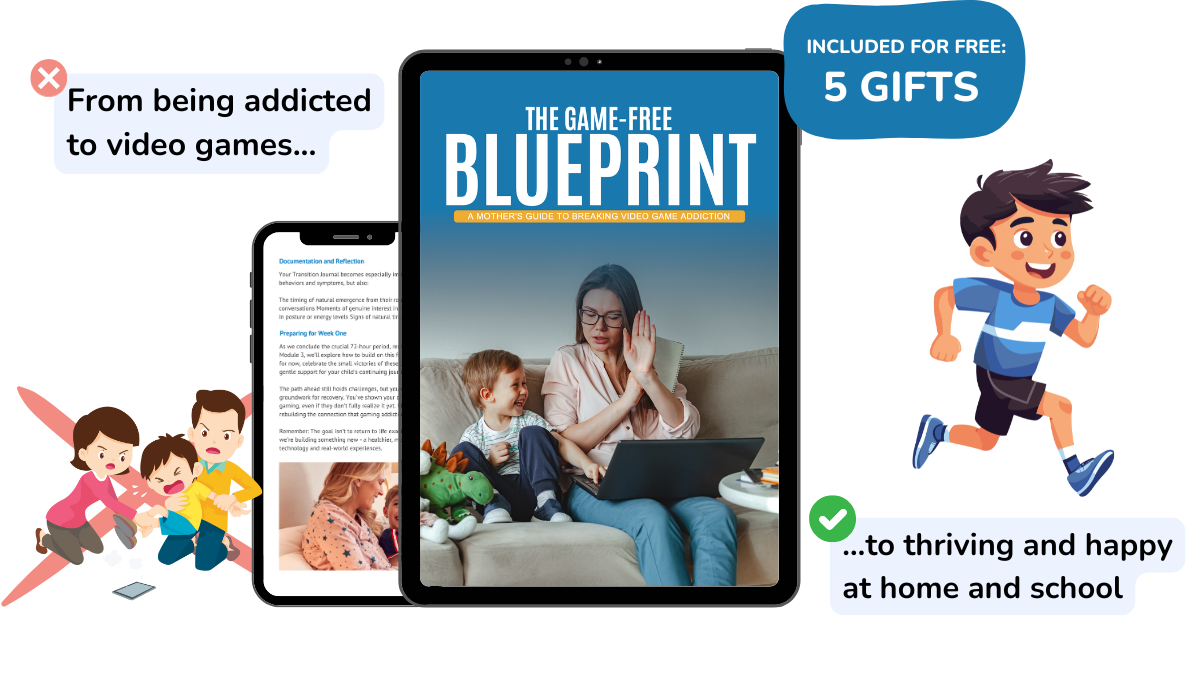
Designed for parents and caregivers of young people ages 8–19, the guide offers a 30-day framework to help you work through the material step by step. Every young person and family is different, so adapt the ideas to your circumstances and seek individualized support when you need it.
Gaming concerns can be connected to mental health, neurodevelopment, school stress, or other circumstances. Consider consulting a pediatrician, licensed mental-health professional, or other qualified provider for individual guidance. If a child may be at immediate risk of harm, contact emergency or crisis services where you are.
Instant digital access · One-time payment
14-day refund period. For refund requests, contact [email protected] with your purchase details.
Educational information only; not medical, mental-health, or professional advice. Results vary, and no outcome is promised. Please review the Privacy Policy and Terms.